What are learning styles?
Sona Lisa Bose
Have you ever wondered why your classmate, friend, or colleague can hear something once in a new language and remember how to say it perfectly the next time, but for you, the word has gone *poof* l
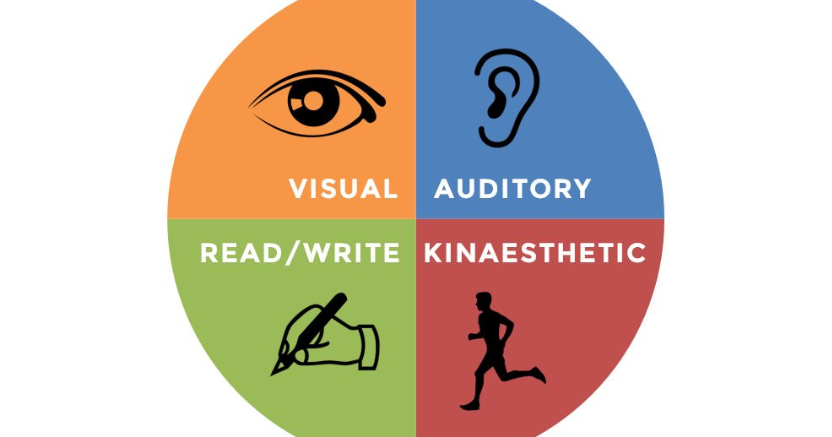
Have you ever wondered why your classmate, friend, or colleague can hear something once in a new language and remember how to say it perfectly the next time, but for you, the word has gone *poof* like a bubble vanishing before your eyes? Or that the person sitting next to you in class needs to underline, highlight, and annotate everything in detail, whereas you just make a quick note and that’s that, leaving you feeling guilty and wondering if you’ve missed something? Well, it could all be down to something known as Learning Styles whereby learners have a natural preference on how they would like to receive and retain information - whether that be by hearing (auditory), reading or drawing (visual), or doing, underlining, copying (kinaesthetic).
What does this mean exactly?
Visual, auditory and kinaesthetic learners
If you are the type of person who likes drawing maps or looking at diagrams of how things work, you could have a preference for a visual style of learning. If you like repeating things out loud, then you could be auditory. And if reading an instruction manual would leave you cold, frustrated, and itching to get going yourself, then it may be that you are more kinaesthetic.
Analytic and global learners
There are also those learners who are known as field learners or analytic learners - those who like concentrating on the details of ideas and language. Then there are those who look at the whole picture - global learners.
Reflective and impulsive learners
Finally there are reflective learners, who like making sure their message is conveyed accurately and precisely, and impulsive learners, those who are happy to take risks with language learning.
Of course, our brain is a complex thing, and as everything is interconnected anyway, there’s no doubt that we use all our senses and capacities to learn. When one modality is triggered another one can be activated too - think of how a smell can trigger a memory.
Moreover, learning can also be influenced by culture and educational background. There’s therefore no use trying to pigeon- hole anyone, including yourself, into a particular learning style. That said, many people will have a preference to one or two ways of learning, and knowing this can help you in your study plans and learning progress. For example, if you are analytic, having all your lessons on unstructured, spontaneous speech probably wouldn’t work for you. Similarly, if you are kinaesthetic, just listening to a lecture will probably have little impact on your learning. So, what should you do to give myself every chance of maximising your learning potential? Well, the first step is to get a rough idea of which learning style you have.
How can I find out what my learning style is?
Before we start, have a think. What do you think you are? Auditory, Visual, Kinaesthetic? Now, take a test and find out. There are many different models, and you can have a go at some quick and free online tests which broadly speaking define your learning style. Take a look at the Gardner Multiple Intelligence Test (although, not quite the same as learning styles, it does have a lot in common), or you can start with the VARK model.
What does this mean for how I should learn English?
Now that you have a rough idea of where your learning preferences lie, you can make minor adjustments and try out different approaches. If you’ve got a more auditory-type attitude, try recording yourself and playing it back. You can even ask your teacher to read out a list of words or phrases for you that you can record into your phone and practice saying back so that you get the pronunciation just right.
Are you more of a visual learner? Why not draw pictures to help yourself remember new vocabulary rather than just writing lists? Or, if you need some help with grammar, try looking for a pictorial description, like a time line, or chart that will help you identify the concept.
If you are more of a kinaesthetic learner and you need to ‘do’ to learn - then try making yourself flash cards that you can physically play with, turn over, or match. You can also do this online using free educational technology tools, such as Quizlet or Memrise - which would also work for the visual learners, too.
How does this impact learning online?
Now that learning and the world in general is growing more and more digital every day, this distance learning approach can leave some learners cold. While auditory and visual learners may love the fact you can see, hear, and learn, kinaesthetic learners may miss the familiar feel of pen on paper, or the reassuring sight of the blackboard or whiteboard. However, with a little adjustment, there is no reason why learning via webinars, learning online, or even blended learning can’t work for you, too. The most important thing is to have a pen and paper handy, so you can make notes while you attend the online lesson - don’t feel that because it’s all online, you have to learn purely via a computer or keyboard - just keep your traditional tools close to you. Also, with the use of forums, chat rooms, and online conference rooms, you can still feel part of a classroom, and have that interaction that’s so important for you - so you can still get that dynamic learning experience.
So, if you’re looking for a new challenge for this year, then think about learning a language online. Explore learning styles and find out which works the best for you. You’ll need to try a variety of approaches - try recording ideas on your phone, drawing pictures in a book, or sticking post-it notes around your room to help you remember new ideas, then work these ideas into your online learning schedule.