British English in the workplace
Sona Lisa Bose
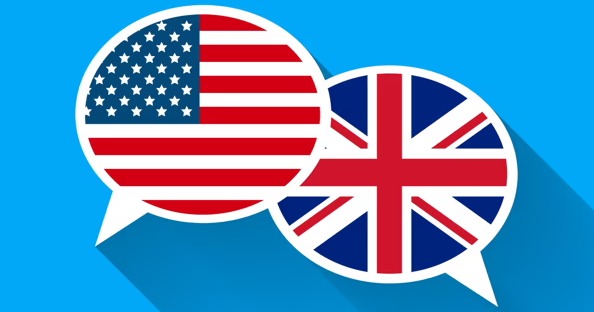
“The English and the Americans are two peoples divided by a common language.”
“The English and the Americans are two peoples divided by a common language.”
That’s what Nobel Prize winning author, George Bernard Shaw, is meant to have said at any rate. We all know that Americans and Brits don’t see eye-to-eye when it comes to spellings, grammar and vocabulary.
Is workplace English really so different?
But what about the everyday speech we use in the workplace? Can we really be so different? OK, so the accents might vary, and there might be the odd idiom or colloquialism that doesn’t quite cross the Atlantic, but it’s the same language, isn’t it?
Well, not quite. It’s not that we use different types of sentences or different types of nouns, it’s just that cultural differences mean that we express things in different ways. And this means that misunderstandings can occur – not great in modern-day workplaces which are growing ever more international.
The British love of understatement
“Not great” … As I typed that, I just realised what a perfect, unconscious example of Brits’ speech that was. It’s typical because Brits love to use negatives before a positive adjective to lessen the impact of what we say.
What do I really mean when I say “not great”? Well, I actually mean that misunderstandings in the workplace are “awful”. They lead to confusion, wasted time, and even conflict. Why didn’t I just say “awful” then? It’s because using a word like “awful” is too strong – it would sound harsh to a native English speaker from Britain. So we try to reduce the pain of inflicting negative comments by being more indirect. We also use modifiers to soften the impact of our statements.
Softening a refusal
“It’s a bit beyond our price range,” we might say. This doesn’t really mean “a bit” – it actually means “there’s no way we’re going to pay that much!”
It’s just that we would never say that so bluntly unless we knew someone really, really well.
Playing down the positives
Similarly, we tend to downplay positives too. While our American buddies might love to sing their praises at how “wonderfully awesome” a presentation was, Brits at work would be more likely to celebrate over a pint of beer at the end of the day and say, “Well, that didn’t go down too badly, did it.” The problem with this subtleness is that it’s often lost to other English speakers, including Americans and those who speak English as a second or foreign language. In fact, a YouGov survey found that half of the Americans questioned wouldn’t know if a British person was calling them an idiot!
What the British say and what they mean
Let’s look at some more examples from a famous list:
| What the British say | What others understand | What the British mean |
| I hear what you say | They accept my point of view | I disagree and do not want to discuss it further |
| With the greatest respect... | They are listening to me | I think you are an idiot! |
| That's not bad | That's poor | That's good |
| That is a very brave proposal | They think I have courage | You are insane! |
| That’s quite good | They like it | It’s disappointing |
| That’s quite good | They think it’s OK | I love it! |
| I would suggest... | They want me to think about the idea, but I can do what I like | Do it or be prepared to justify yourself |
| Oh, by the way | This next bit is not very important | The primary purpose of our discussion is... |
| I was a bit disappointed that... | It doesn't really matter | I am really annoyed |
| Very interesting | They are impressed | That is clearly nonsense |
| I'll bear it in mind | They will probably do it | I've forgotten it already |
| I'm sure it's my fault | Why do they think it was their fault? | It's your fault |
| You must come for dinner | I will get an invitation soon | It's not an invitation, I'm just being polite |
| I only have a few minor comments | They have found a few typos | Please re-write it completely |
| Could we consider some other options? | They have not yet decided | I don't like your idea |
| I couldn’t agree more | They don’t agree | I love it! |
It works the other way too
The thing is, it works the other way too. I asked a North American if they wanted some more tea. “Sure,” she said. I wasn’t quite sure how to read that. It sounded a bit apathetic, if not rude, to me. But actually, I think it was just a way to say, “Yes please, that would be great”.
Is it deceptive? Not really
Now the problem is, many non-British English speakers may see this kind of language as deceptive. I’ve heard it called being two-faced, or sarcastic, or ironic. In truth, we are not doing it to deceive but as a mechanism to be polite. Why? Well, in many languages there are different forms of “you”. For example in French you would use “tu” with friends and colleagues you know well, and “vous” with new business partners and those you wanted to show respect to. We haven’t got a useful formal pronoun like “vous” in English, so we have to use other means. And this is how we do it. It’s not that we’re being deliberately confusing or underhand, we’re actually just being ourselves, and trying to be nice. (Unless we start off by saying, “With the greatest respect...” of course!)