Are you hangry? Chillax, and we’ll have a cronut for brunch
Matthew Steele
Having fun with portmanteau words You’ve probably seen lots of portmanteau words in English. But what are portmanteau words? Are they all slang words? And how can analysing them help ESL learners? Read on to find out more about this particularly joyful aspect of English word play, the source of many contemporary new words.
Having fun with portmanteau words
You’ve probably seen lots of portmanteau words in English. But what are portmanteau words? Are they all slang words? And how can analysing them help ESL learners? Read on to find out more about this particularly joyful aspect of English word play, the source of many contemporary new words.
Let me start with one of the most used words in the British press over the last 4 years: "Brexit".
It’s a great example of a portmanteau word. Brexit is derived from two separate words, "Britain" and "Exit". These two words have been slammed together to create a whole new word "Br-exit"… Quite what it means is still up for debate, so I’m not going to provide a definition. Let’s just leave it at "Britain’s departure from the European Union" for now.
The word "Brexit" is what linguists might call a coinage, a newly created word, a compound word, a blend, a merged word, a neologism, or even a “Frankenword” (the latter itself being an example of a portmanteau word, derived from Frankenstein + word).
These word mash-ups are rather fun to create, and if a new portmanteau word is successful, it may end up becoming part of the established English language. This is because English is a beautifully fluid language, with thousands of new words being added to official English dictionaries on a regular basis, much to the dismay (or joy?!) of ESL learners.
The term “portmanteau word” was originally coined by Lewis Carroll (the pen name of Charles Lutwidge Dodgson, an English writer of children's fiction) in his book “Through the Looking Glass” from 1871, when Humpty Dumpty said to Alice, “You see it’s like a portmanteau — there are two meanings packed up into one word.”
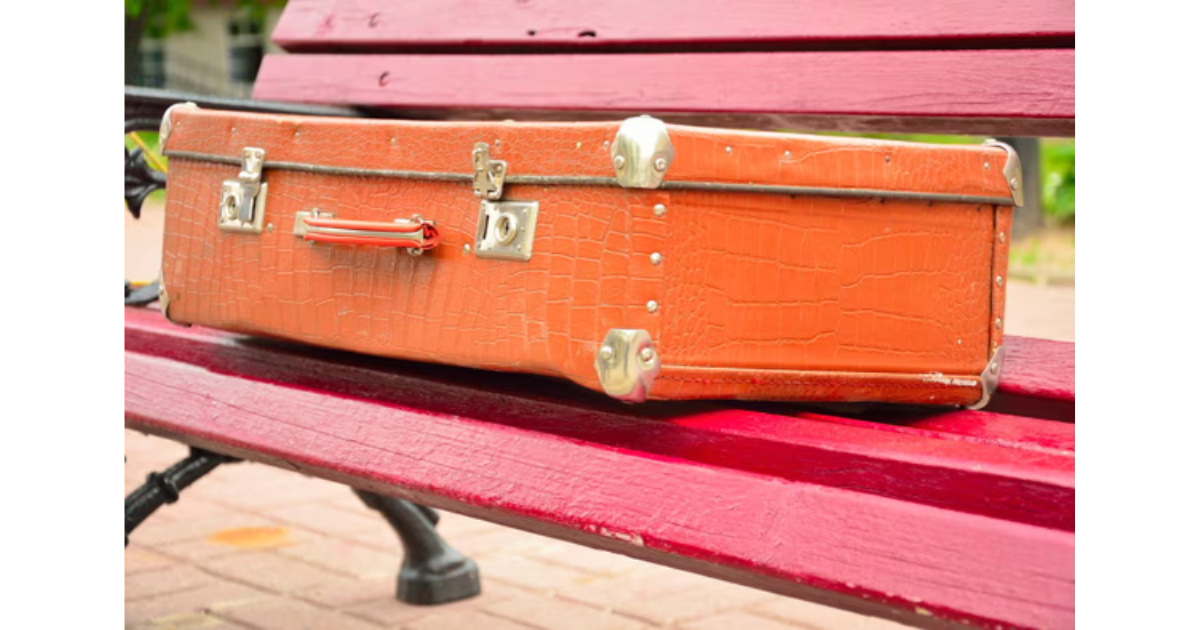
It helps to know that a portmanteau is a suitcase that has two distinct halves, often hinged together.
So portmanteau words are the coming together of two lexical parts, often in an eccentric and witty way.
Journalists love coinages and portmanteau words. It seems they are constantly competing with each other to be the first to quote a new coinage in their news articles, and will brag if they were the first to use a popular new term. I think this is because journalists are paid to capture the zeitgeist, and so they want to use new buzzwords that encapsulate the essence of a new trend, issue or phenomenon. Some new words created by journalists fail and do not catch on. Others are more successful and are re-quoted and re-tweeted until everyone has heard of them. What words become commonplace is usually a matter of taste, or age.,
Some older portmanteau words have been around for so long that hardly anyone will know that the particular word was a coinage. For example the word ‘electrocute’, now in common use, originally came from "electricity" + "execute".
And when the coronavirus crisis started sweeping the globe, another portmanteau word grabbed my attention: I had read a lot about clean-up operatives wearing "hazmat suits", and had to stop and think before it hit me: "hazardous" + "material" = “hazmat”.
I'd now like to try and help you to distinguish some common portmanteau words in English that have passed the "acceptability" threshold and made it into accepted (even formal) English, versus which ones, although widely in use, are still deemed informal or slang words. I hope the provided meanings will also help if the words are new to you!
Accepted portmanteau words
Brexit | Britain + exit | Britain’s departure from the European Union |
brunch | breakfast + lunch | A late morning meal eaten instead of breakfast and lunch |
blog | web + log | A set of website or web page articles written in an informal or conversational style |
electrocute | electricity + execute | To injure or kill someone by electric shock |
motel | motor + hotel | A roadside hotel designed primarily for motorists |
Oxbridge | Oxford + Cambridge | Oxford and Cambridge universities considered together |
emoticon | emotion + icon | A representation of a facial expressions and emotions, formed by keyboard characters and used to convey feelings or intended tone |
pixel | picture + cell | A small area of illumination on a computer display screen |
bionic | biology + electronic | Having or denoting an artificial or electromechanical body part |
smog | smoke + fog | A fog or haze intensified by smoke or other atmospheric particles |
Slang (informal) portmanteau words
guesstimate | guess + estimate | A broad estimate based on a mixture of guesswork and calculation |
ginormous | gigantic + enormous | Extremely large |
hangry | hungry + angry | Bad-tempered due to hunger |
chillax | chill + relax | To calm down and relax |
cronut | croissant + donut | A novel pastry, a cross between a croissant and a doughnut |
staycation | stay + vacation | A holiday spent at home, or in one's home country rather than abroad |
glamping | glamour + camping | A form of camping involving more luxurious facilitates compared to traditional camping |
bromance | bro + romance | A close but non-sexual relationship between two men |
Give it a go yourself!
Try creating your own portmanteau words and sharing them with a friend to see if they can guess what meaning you were trying to convey. Post your new word on social media, and it may become the next global buzzword overnight! Then you can sit down for brunch, chillax, and reward yourself with a ginormous cronut.